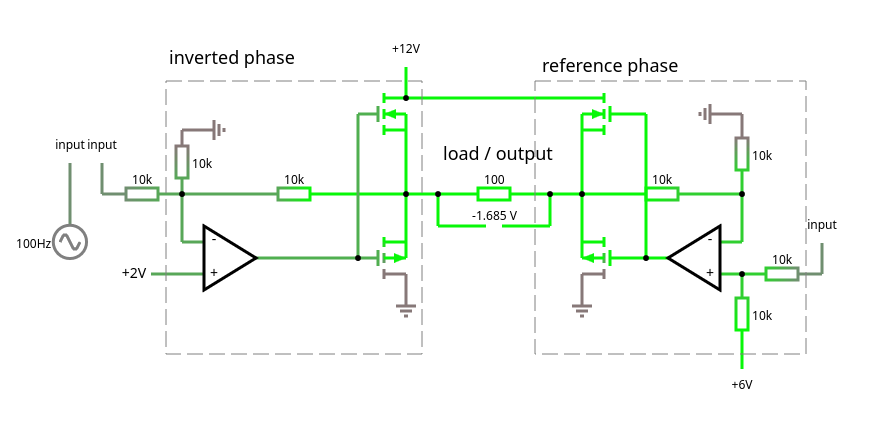
Simplified double push-pull amplifier

There exists a simpler design for the double push-pull amplifier with cross-over compensation [DPP]. A quick recap of the previous design: the input signal is divided into a reference phase and an inverted phase, each phases are amplified separately and drive two push-pull amplifiers [PPA] respectively. What happened so far: while in absolute terms simple, … Continue reading Simplified double push-pull amplifier
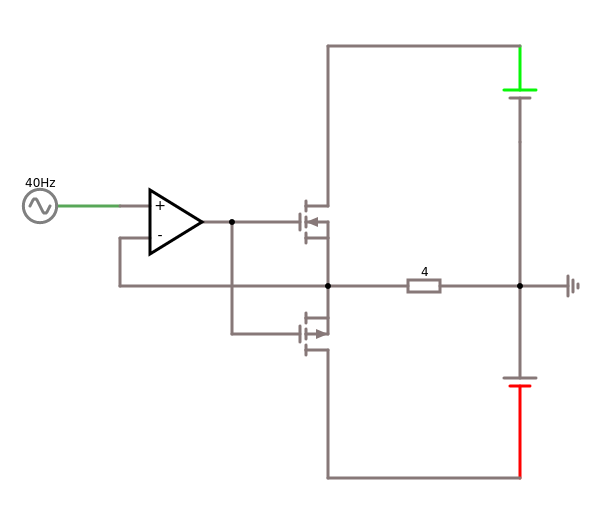
Single push-pull amplifier with cross over compensation

There is a Mandarin translation of this post. This is just going to be a quick one. Double push-pull amplifier with cross over compensation explained a high-power amplifier circuit which creates a balance point and corrects for cross over. A much simpler version of the circuit depends on two equal voltage sources creating that 0V … Continue reading Single push-pull amplifier with cross over compensation

Double push-pull amplifier with cross over compensation

Push-pull amplifiers [1] are great for driving heavy loads because they divide work among two transistors and produce a centred output signal that can freely move up or down around the centre. Simple push-pull amplifier When powering the amplifier with a single power source (eg. a 12V battery), then the output signal oscillates around half … Continue reading Double push-pull amplifier with cross over compensation