A Zabbix active agent2 template for monitoring containers and container logs

The problem Zabbix (up to v7.2) doesn't seem to be able to monitor the Docker engine and containers in active mode, nor can it collected container logs, which is surprising, since it collects a wide range of container-, image- and runtime engine metrics in passive mode. The solution is a custom agent2 (I'll refer to … Continue reading A Zabbix active agent2 template for monitoring containers and container logs
Cloud vs. on-premises is about shaping risk

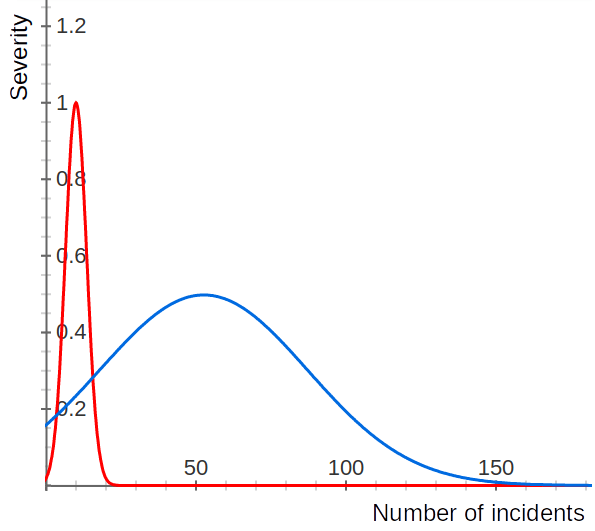
TL;DR: moving to the public cloud consolidates many small risks into few large ones. A recent GCP cloud outage (https://status.cloud.google.com/incident/cloud-networking/20004) highlights an issue with running more and more parts of the internet on the same infrastructure: as more computing resources consolidate in large cloud providers' data centres, the risk of a significant, global outage of … Continue reading Cloud vs. on-premises is about shaping risk

Varnish, session_linger and dropped connections

Recently I conducted a load test on my beloved low end Ubuntu 8.04 VPS. The setup consists of a mysql 5.1 DB, a Tomcat 6 webapp, openjdk 6 and Varnish 2.1.2. The load generator was issuing HTTP GET requests through a DSL connection which were supposed to create a decent load on Tomcat. To my … Continue reading Varnish, session_linger and dropped connections

A counterintuitive relation between CPU and memory usage

Continuing my tests on low-end server environments, I recently set up a stress test of a load balanced tomcat webapp. Part of that tests consist in reducing the available memory for the webapp (JVM -Xmx switch) and see how low it could go before negatively affecting performance. It's common knowledge that once available memory runs … Continue reading A counterintuitive relation between CPU and memory usage